BB Triple Combo
A triple effect pedal built for a friend.
BB Triple Combo
KiCad projects files for a 3-in-1 effect pedal:
- boost
- overdrive/distoriton
- fuzzy octave up
Each of these circuits is an original analog design by me. Each effect can be independently engaged or bypassed via 3 footswitches, and there is a toggle to change the order of the boost (first or last) so you can have either:
boost → distortion → octave
or:
distortion → octave → boost
Finally, there is a "sag" control to starve the pedal of power. No idea what that will sound like yet as I've not even prototyped it. In theory it should increase distortion and maybe add some subtle compression type effect.
Called "BB Triple Combo" because the overall design was at the request of an internet friend with these initials.
Boost
Despite having the most clipping diodes of any effect in this bundle, the boost is clean-ish. It's a non-inverting op-amp based boost with LEDs in the feedback loop (like a Tube Screamer) but the gain is dept low so these diodes rarely have an effect. Their purpose is mostly to prevent the opamp from clipping on large inputs. After the op-amp, there is also a diodes-to-ground clipping section, similar to an MXR Distortion+ effect. But rather than causing distortion, these diodes add a supposedly tube-like smidge of dynamic harmonic content. Credit for this concept goes to the wizards at RunOffGroove and their Thunderbird design.
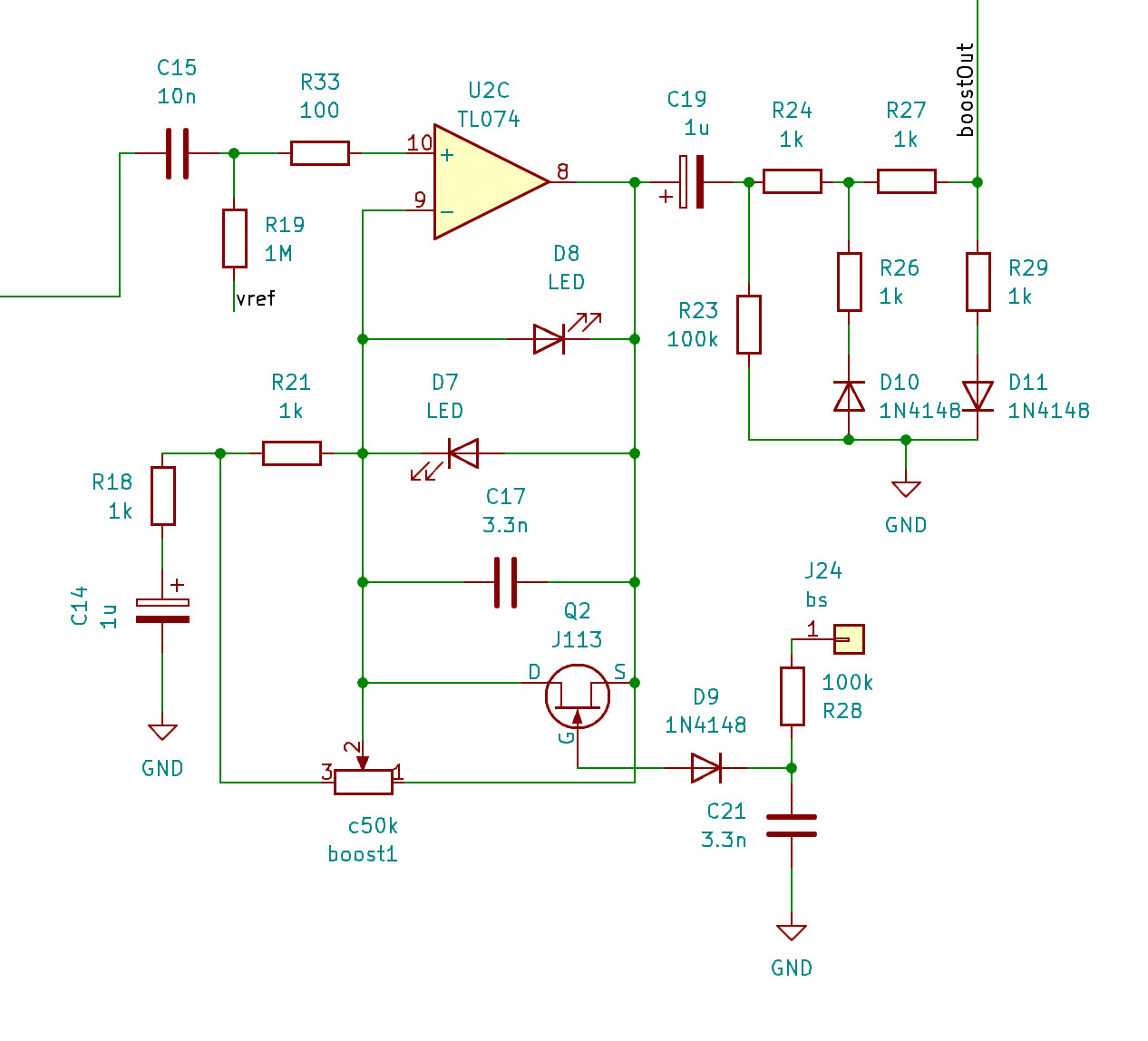
Controls:
- gain
Distortion
This distortion design eschews most guitar distortion design sensibilities. The signal path starts with a high-impedance buffer to preserve your guitar's high frequencies. Next comes an inverting soft clipping stage with a unique voltage divider gain control. This gain control arrangement permits a wide range of gain adjustment (11dB-40dB) despite using a mere 50k potentiometer in the feedback loop (lower resistance means less thermal noise).
One note regarding the schematic. The current-limiting resistor in series with the clipping diodes can be anywhere from 1k to 10k depending on mood. The original value (10k) encourages a softer clipping sound whereas lower values down to 1k will be harsher and more aggressive.
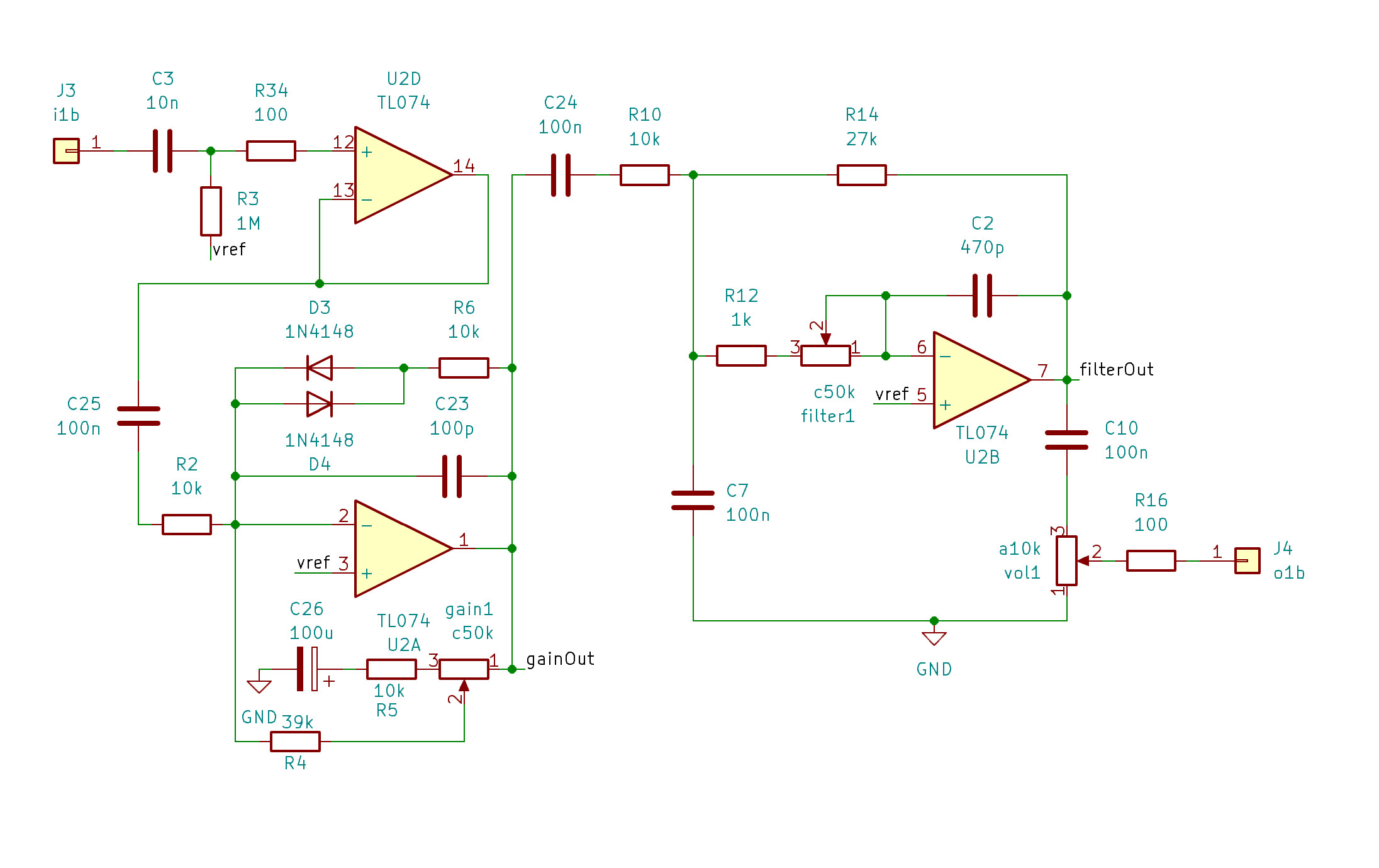
From there the signal goes through a 2nd-order lowpass filter with a range of adjustment from 500Hz to 2.6kHz. This isn't a large range of sweep but the 12dB/octave slope makes it feel like it covers more sonic ground. This kind of filter is more typically found on analog synthesizer equipment, but I think it works well for guitar.
Controls from left to right:
- volume
- filter
- gain
Octave Fuzz
This effect started as an experiment in making a "squarer" circuit. Up front is a JFET buffer and two high-gain CMOS inverter stages. The squarer concept is realized by splitting this amplified signal into two paths and routing each through a pair of series diodes pointed in opposite directions. The negative signal routes straight into the output mixer, while the positive signal gets inverted and then routes through an adjustable potentiometer labeled "Splat" and some series resistance and capacitance. The Splat control allows you to adjust the character of the octave effect - more pronounced octave in one direction, and more compressed and spongy in the other direction.
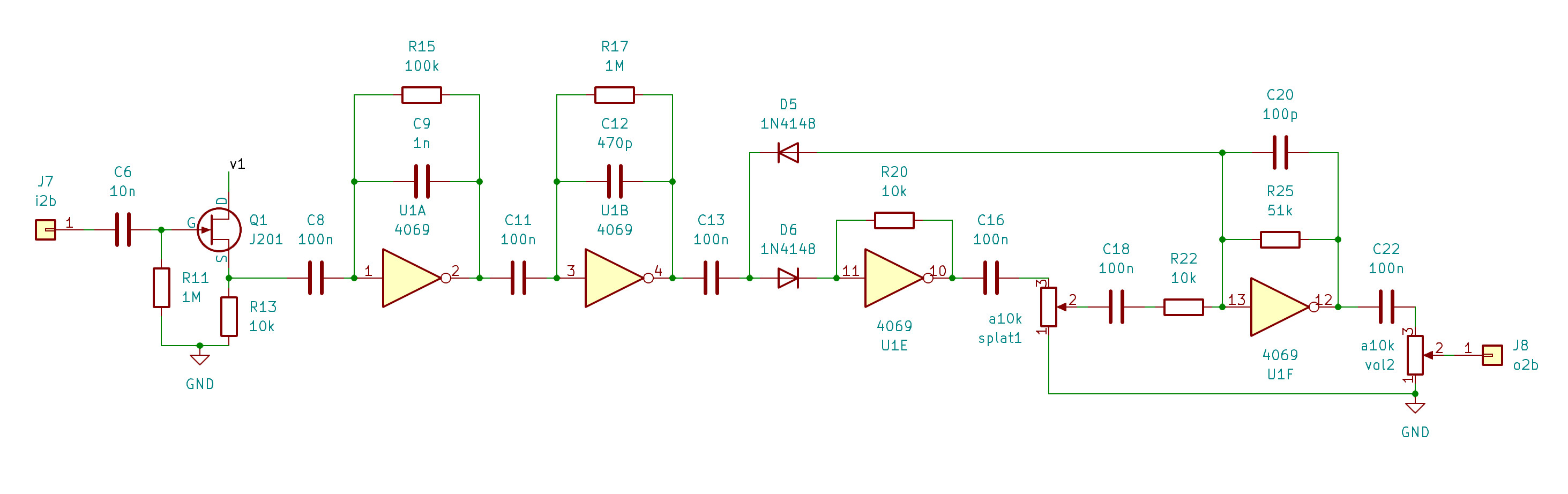
Controls from top to bottom:
- volume
- splat
Circuit Board Layout
This is the largest design I've made in KiCad's PCB layout tool to date and I was proud of getting all the traces on a single layer.
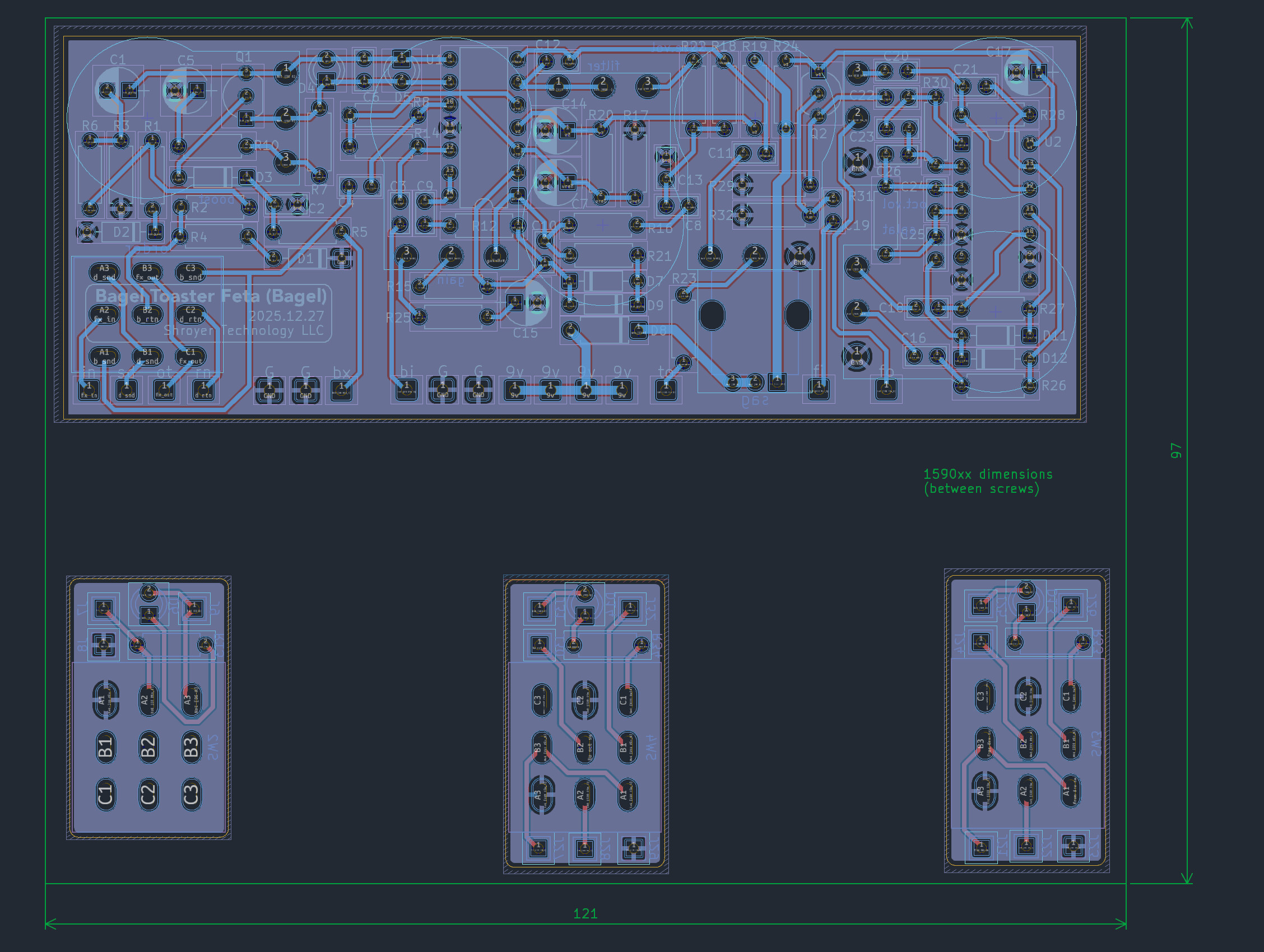
Eventually I changed to dual layer because it let me make the board more compact and route some traces more cleanly.
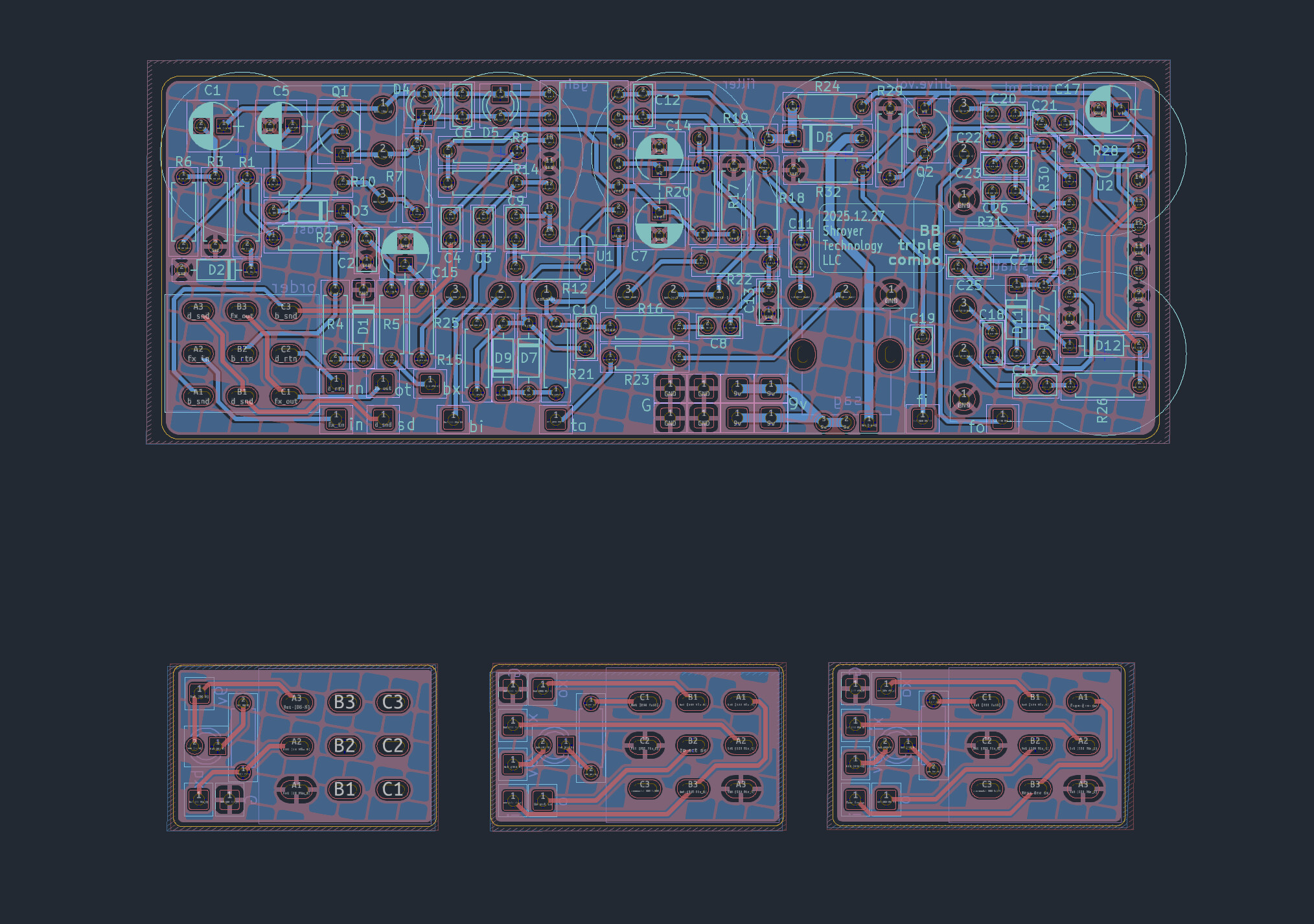
KiCad is quirky and frustrating at first, but it's growing on me. The 3d rendering tool is especially cool.
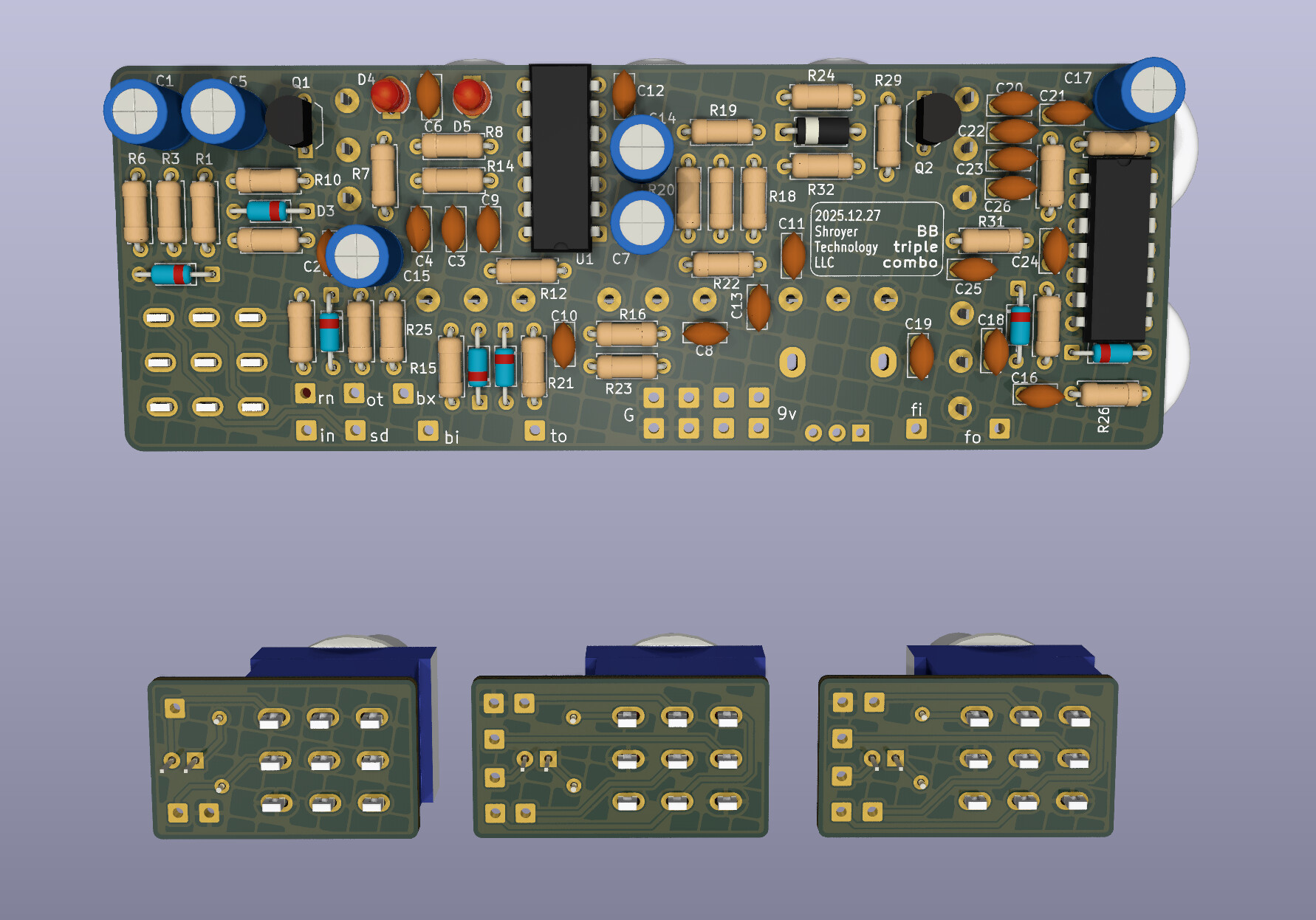
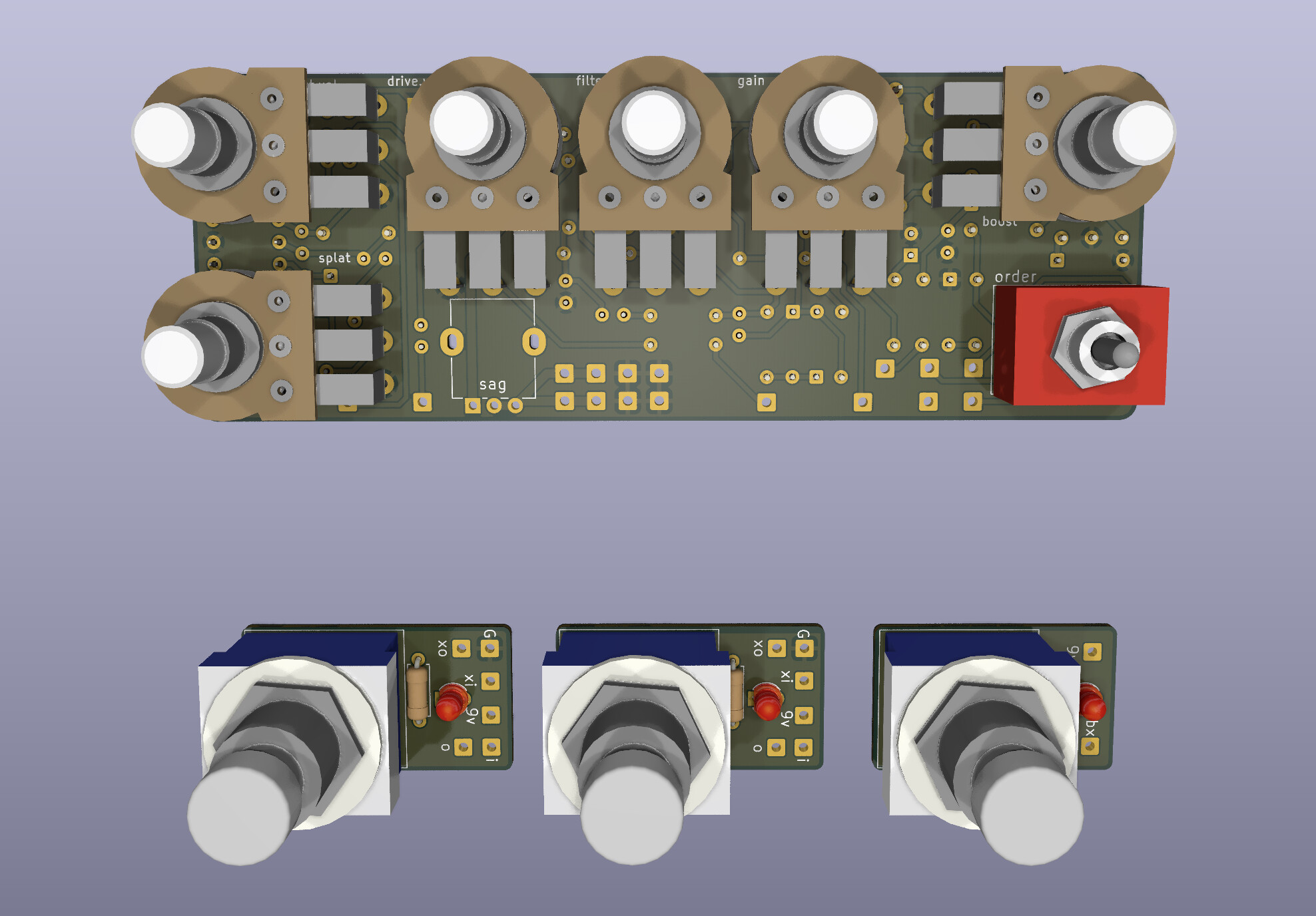
Next step is to have the board fabricated. I used OSH Park last time and the results were good but not fast. Might try a different one this time.
Update: Currently being fabbed by OSH Park. Hope it turns out as good as the last board.